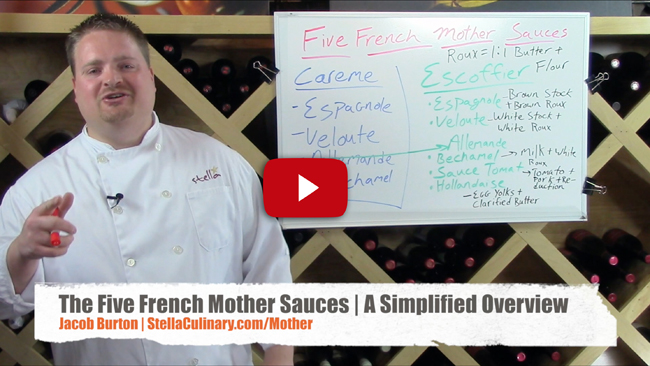
Since we covered so much ground in the French Mother Sauce Series, both on the blog and podcast, I figured it would be a good idea to place all the information in one, easy to find post. The mother of all mother sauce resources if you will.
So here it is; a list of the mother sauces with their corresponding podcast episodes, classic components, serving suggestions, and how to posts.
But first, a quick history lesson.
A Brief History of The Mother Sauces
The French mother sauces were originally four base sauces set forth by Antonin Careme in the 19th century. Careme’s four original mother sauces were Allemande, Bechamel, Veloute and Espagnole.
In the 20th century, Chef Auguste Escoffier demoted Allemande to a secondary sauce of Veloute, and added Sauce Tomat and Hollandaise.
One Last Thing…
Some of the classic versions of these sauces use different thickening agents to bring the sauce to its proper consistency. If you’re unfamiliar with thickening agents such as roux, liasons, or emulsions, you can follow the corresponding links for more information.
Sauce Bechamel
-
Base: Milk (Usually Whole Milk)
-
Thickening Agent: White Roux
-
Classical Flavorings: White Onion, Clove, Bay Leaf, Salt, White Pepper, Nutmeg
-
Common Secondary Sauces: Cream Sauce, Mornay, Cheddar Cheese Sauce, Mustard Sauce, Nantua
-
Classically Served With: Eggs, Fish, Steamed Poultry, Steamed Vegetables, Pastas, Veal
-
Technique and Recipe: How To Make Bechamel and its Derivatives
-
Corresponding Podcast Episode: SCS 11| Sauce Bechamel
-
Video Technique: Culinary School Bechamel | A How To Video
Sauce Veloute
-
Base: White Stock (Classically Veal, but Chicken and Fish Stock can also be used)
-
Thickening Agent: Classically a Roux, but sometimes also a Liason is used.
-
Classical Flavorings: None, used specifically as a base
-
Common Secondary Sauces: Sauce Vin Blanc (White Wine Sauce), Sauce Supreme, Sauce Allemande, Sauce Poulette, Sauce Bercy, Sauce Normandy
-
Classically Served With: Eggs, Fish, Steamed Poultry, Steamed Vegetables, Pastas, Veal
-
Technique and Recipe: How To Make Sauce Veloute and its Derivatives
-
Corresponding Podcast Episode: SCS 10| Sauce Veloute
Sauce Tomat (AKA Tomato Sauce)
-
Base: Tomatoes (Raw, Tomato Paste, Tomato Puree, Stewed Tomatoes)
-
Thickening Agent: Classically a Roux, modern versions commonly use a reduction or purees
-
Classical Flavorings: Salt Pork, Mirepoix, Garlic, White Veal Stock, Salt & Pepper, Sugar (Just enough to balance acidity, not enough to make the sweetness perceptible).
-
Common Secondary Sauces: Modern variations concentrate more on seasonings giving rise to sauces such as Creole, Portuguese and Spanish Sauce Tomat.
-
Classically Served With: Pasta, Fish, Vegetables (Especially Grilled), Polenta, Veal, Poultry (Especially Chicken), Breads and Dumplings such as Gnocchi.
-
Technique and Recipe: How to Make Tomato Sauce and Its Modern Variations
-
Corresponding Podcast Episode: SCS Episode 12| Sauce Tomat
Sauce Espagnole (AKA Sauce Brune or Brown Sauce)
-
Base: Roasted Veal Stock (Roasted Chicken Stock Is Sometimes Used In Modern Variations).
-
Thickening Agent: Brown Roux
-
Classical Flavorings: Mirepoix, Sachet (Bay Leaf, Fresh Thyme, Parsely), Tomato Puree
-
Common Secondary Sauces: Demi-Glace, Bordelaise, Sauce Robert, Lyonnaise, Sauce Madeira, Sauce Bercy, Sauce Chasseur
-
Classically Served With: Roasted meats, especially beef, duck, veal, lamb
-
Technique and Recipe: How To Make Sauce Espagnole and Demi-Glace
-
Corresponding Podcast Episode: SCS Episode 13| Sauce Espagnole
Hollandaise Sauce
-
Base: Egg Yolks and Butter (Classically Clarified Butter)
-
Thickening Agent: Emulsification
-
Classical Flavorings: Peppercorns (Black), White Wine Vinegar, Salt, Lemon Juice, Cayenne Pepper
-
Common Secondary Sauces: Bearnaise, Maltaise, Mousseline, Foyot, Choron…Also check out this post on How to Make Mayonnaise and Its Derivatives, which is based on the hollandaise technique.
-
Classically Served With: Eggs (Eggs Benedict), Vegetables (especially Asparagus), light poultry dishes, fish, Beef (Bernaise Sauce)
-
Technique and Recipe: How To Make Hollandaise: Guidlines and Techniques
-
Corresponding Podcast Episode: SCS Episode 9| Hollandaise
Watch the Video Lecture: The Five French Mother Sauces | An Introduction